Work Authorizations
How Can You Help Maine’s Non-Citizen Community and Employers Understand and Obtain Work Authorizations
Work Authorizations Explained
What is an EAD?
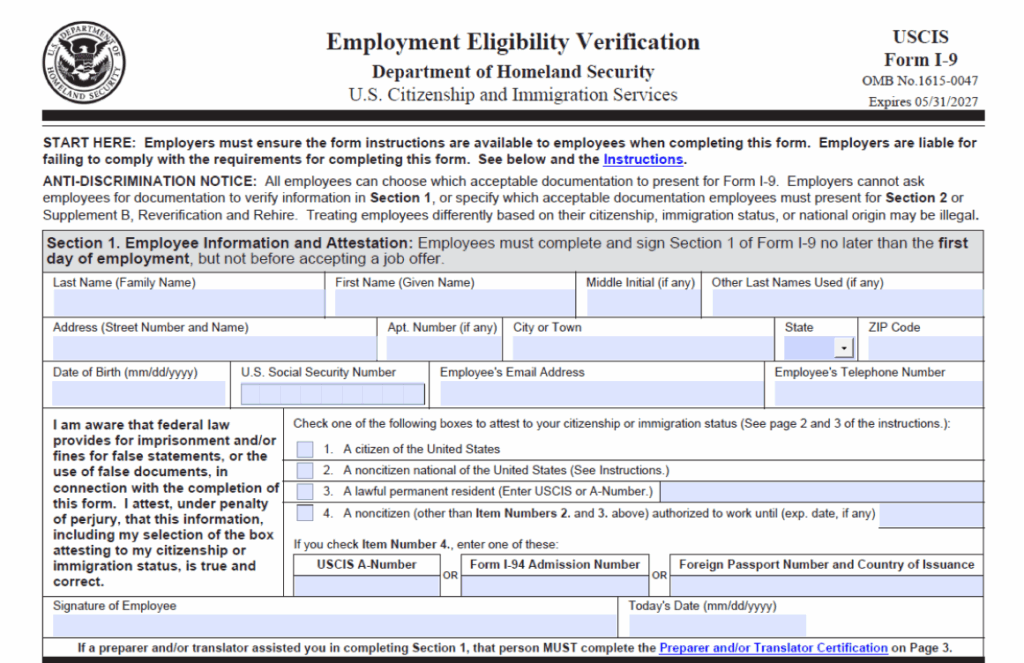
Work Authorizations, aka work permits or Employment Authorization Documents, demonstrate that an individual is legally allowed to work in the United States. The U.S. Citizenship and Immigration Services (USCIS) Website lists all immigration statuses eligible for work authorization. U.S. Immigration law requires employers to verify that every employee or new hire has authorization to work in the U.S. through the I-9 form.
Why Get an EAD?
- Employment: Work authorization makes securing employment easier for non-citizens. The law mandates that employers refuse to hire any worker who does not have an EAD because the burden is on employers to verify an individual’s work authorization.
- Business Creation: Non-citizens with work authorization can register as Independent Contractors. However, there is a risk of an employee, who has not elected to become an independent contactor, being misclassified as one.
How To Prove Work Authorization
Federal law requires employers to verify that an employee is authorized to work in the U.S. Generally, employers have new employees fill out Section 1 of Form I-9 before their 1st day of employment, and employers must fill out Section 2 within 3 business days of the employee’s start date. Employers must also complete the Re-verification and Rehire section before a non-citizen employee’s EAD expires.
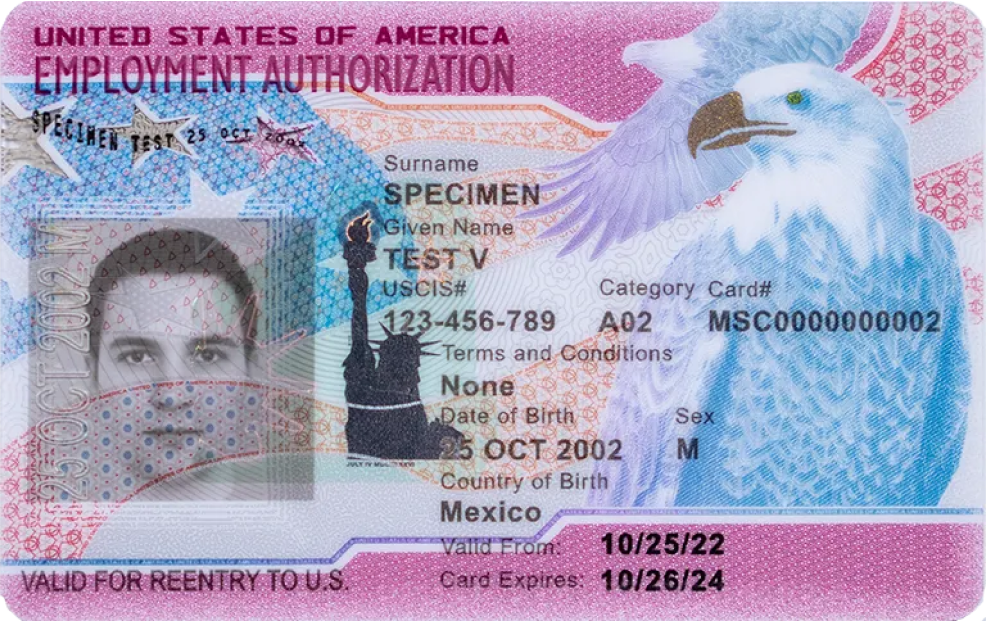
Sample EAD Card
Non-citizens also receive an EAD card further demonstrating their authorization to work in the United States. The EAD card was updated for 2024 and now look like the card shown to the right.
Steps To Receive an Work Authorization
Generally, asylum seekers, refugees, Temporary Protected Status (TPS) holders, students seeking specific employment and those with pending status adjustment applications can apply. Non-citizens in the Portland area who need assistance can contact Hope Acts for support completing work authorizations.
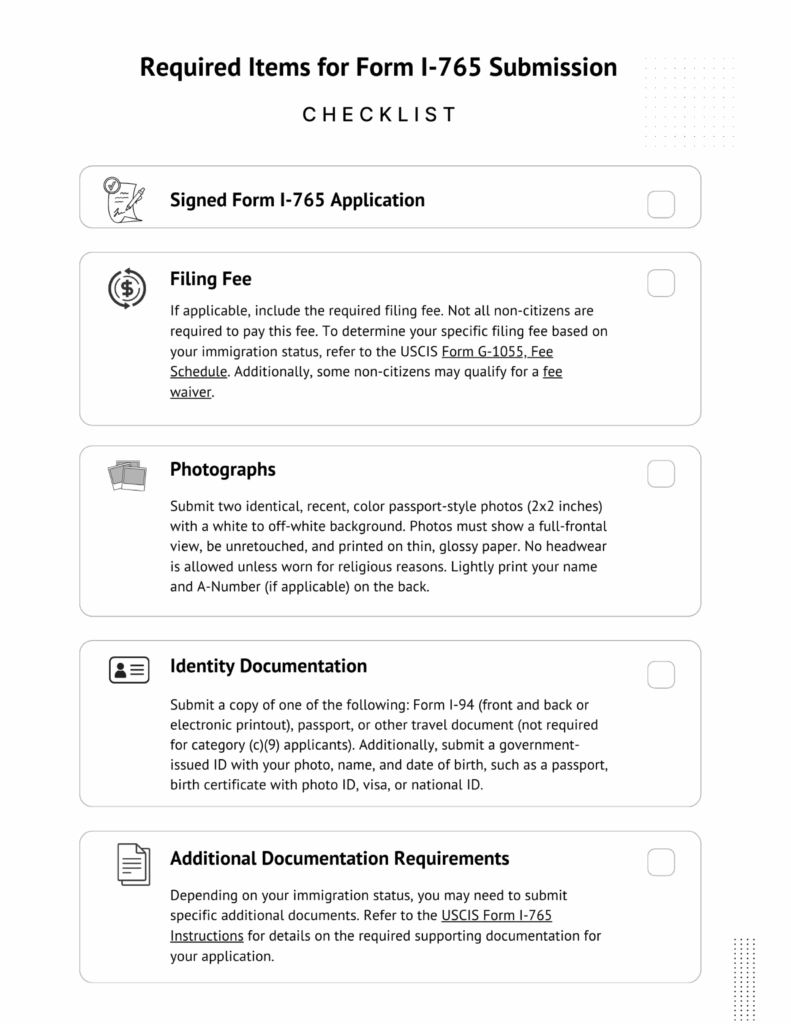
1. Gather Required Documents
For all statuses:
- Copy of Form I-94 front and back;
- Passport or other travel document;
- Two Passport sized photos
- Copy of a government-issued identification document OR
- Previously issued EAD AND
- Form G-28 if represented by an attorney or accredited representative AND
- Additional forms based on status
2. Complete Form I-765
This form collects personal information and eligibility details and can be found on the USCIS website.
3. Pay Relevant Fees
- $0 for Asylum seekers, asylees, and refugees applying for initial EAD.
- $520 for paper applications
or $470 for online submissions for all other statuses applying for initial EAD and asylum seekers, asylees, and refugees applying for EAD renewal - OR Submit Form I-912 to request a fee waiver. Must meet at least one of the following
- Applicant or eligible household member receives a “means-tested” benefit (e.g. SNAP, TANF, SSI, Section 8, CHIP)
- Household income is at or below 150% of Federal Poverty Guidelines at time of filing
- Experiencing “Extreme Financial Hardship” such as an unexpected medical expense
- FAME Foreign Credentialing Grant Program can provide up to $1,000 to assist with initial work permit applications
- TANF-qualified families yet to receive TANF benefits can apply for Alternative Aid Assistance: short term voucher payments to cover employment-related expenses
4. Submit Forms and Required Documents
- Applicants can file online or mail to the appropriate address based on their status.
5. Attend Biometrics Appointment (if required)
- USCIS may schedule a biometrics appointment for fingerprints, photograph, and signature. USCIS will notify the applicant with scheduling details.
6. Await Decision and Monitor Processing
- Apply for expedited processing on 75th day.
- If denied, the non-citizen should seek assistance from an immigration attorney.
7. Receive EAD
- Approved EADs are sent to the address on file when the applicant submitted Form I-765.
Typical Authorization Times for Applications
USCIS provides a receipt number that non-citizens can use to monitor their application. They also provide processing times on their website. Federal law requires USCIS to process EADs for asylum seekers within 30 days, however, delays often push processing to 60 days. Below are typical waiting periods for different statuses.
Nebraska Service Center
Processes 80% of EADs for:
- Refugees in 1 week
- Asylee [(a)(5)] in 5.5 months
National Benefits Center
Processes 80% of EADs for
- Pending 1-485 Adjustments application [(c)(9)] in 5.5 months
National Service Center
Processes 80% of EADs for
- All other EAD types in 2.5 months
Texas Service Center
Processes 80% of EADs for
- Asylee [(a)(5)] in 8 months
- El Salvador TPS in 11.5 months
California Service Center
Processes 80% of EADs for
- All other EAD types in 12.5 months
All Service Centers
Processes 80% of EADs for
- Pending Asylum initial applications [(c)(8)] in 1 month
- Pending Asylum renewal/replacement application [(c)(8)] in 12 months
Work Authorization Renewals
If you plan to renew your Employment Authorization Document (EAD), it is recommended to file Form I-765 up to six months before your current EAD expires. However, you must file no later than 90 days before the expiration date.
On December 13, 2024, the Department of Homeland Security (DHS) issued a final rule permanently extending the automatic renewal period for EADs from 180 days to 540 days.
Effective January 13, 2025, this rule is intended to help prevent lapses in employment authorization caused by processing delays.
To qualify for the 540-day automatic extension, applicants must submit Form I-765 before their current EAD expires and fall into an eligible category, such as refugees, asylees, or individuals with pending asylum applications.
Those who meet these requirements may continue working by presenting their expired or expiring EAD along with a Form I-797C, Notice of Action, showing a “Received Date” prior to the EAD’s expiration.
Employers and government agencies may accept these documents as valid proof of continued employment authorization.
Employer Resources
Here are some links to help Employers answer questions about verifying EADs and other workplace issues.
- Degree Evaluation: The Department of State recommends
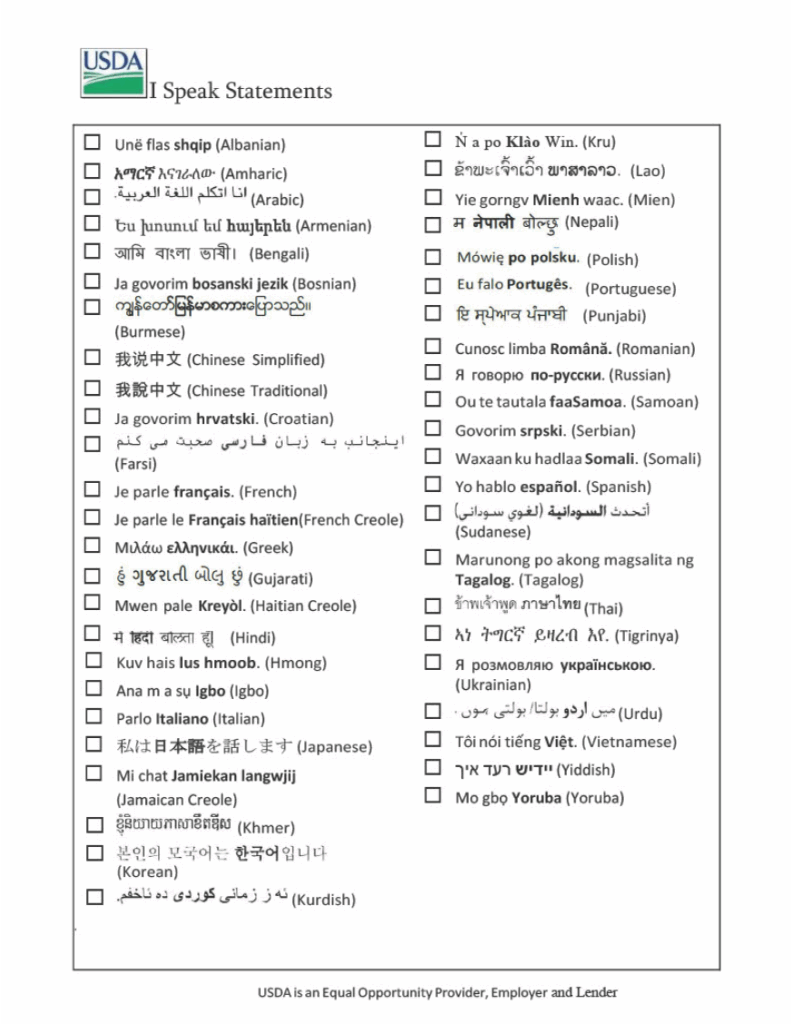
- Language Access: Employers looking to make their workplace more accessible can use these resources:
- Verifying an Employee’s EAD:
- Renew an EAD:
- After the employee provides valid documentation listed under List A or List C of form I-9, the employer must
- Complete the Reverification and Rehire section of the I-9
- Attach to employee’s original I-9
- After the employee provides valid documentation listed under List A or List C of form I-9, the employer must