Work Related Issues
Helping You Make Sense of the Intersection of Common Workplace Issues and Immigration Law
On This Page
Use this page for more information on common issues impacting immigrant workers and solutions.
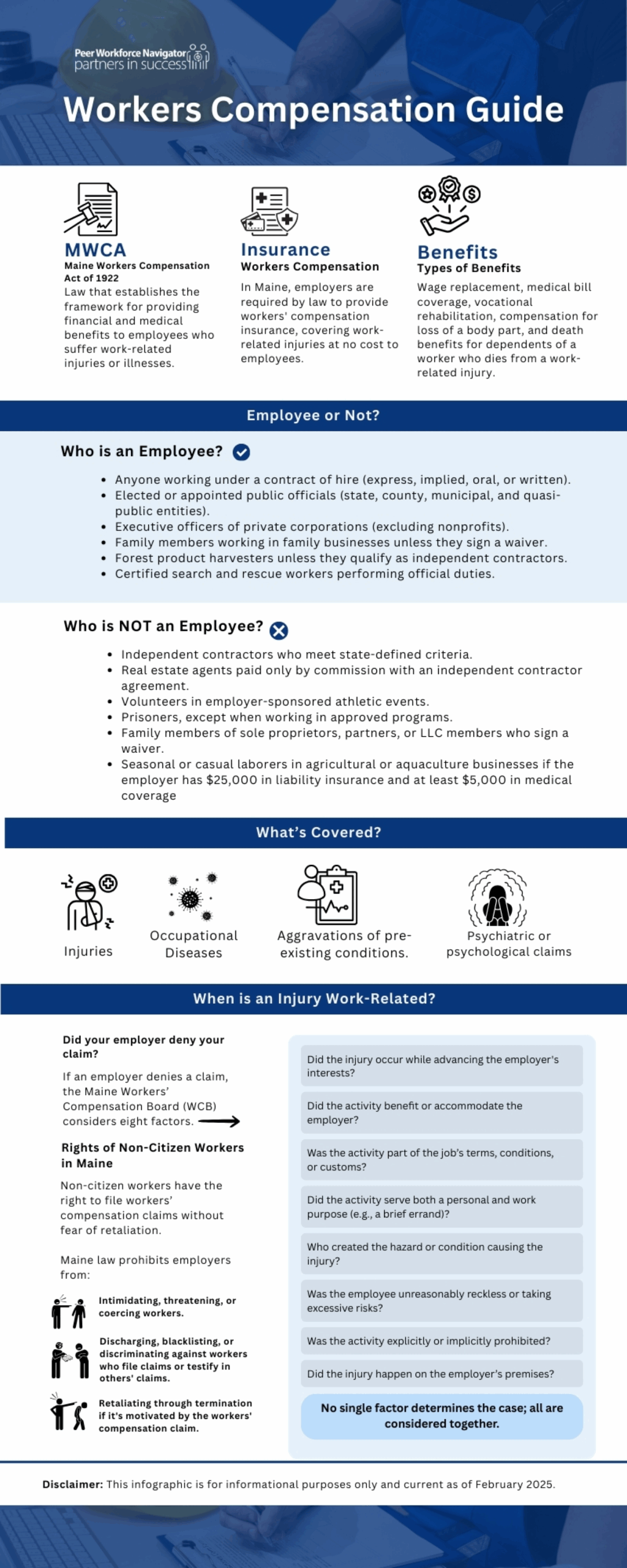
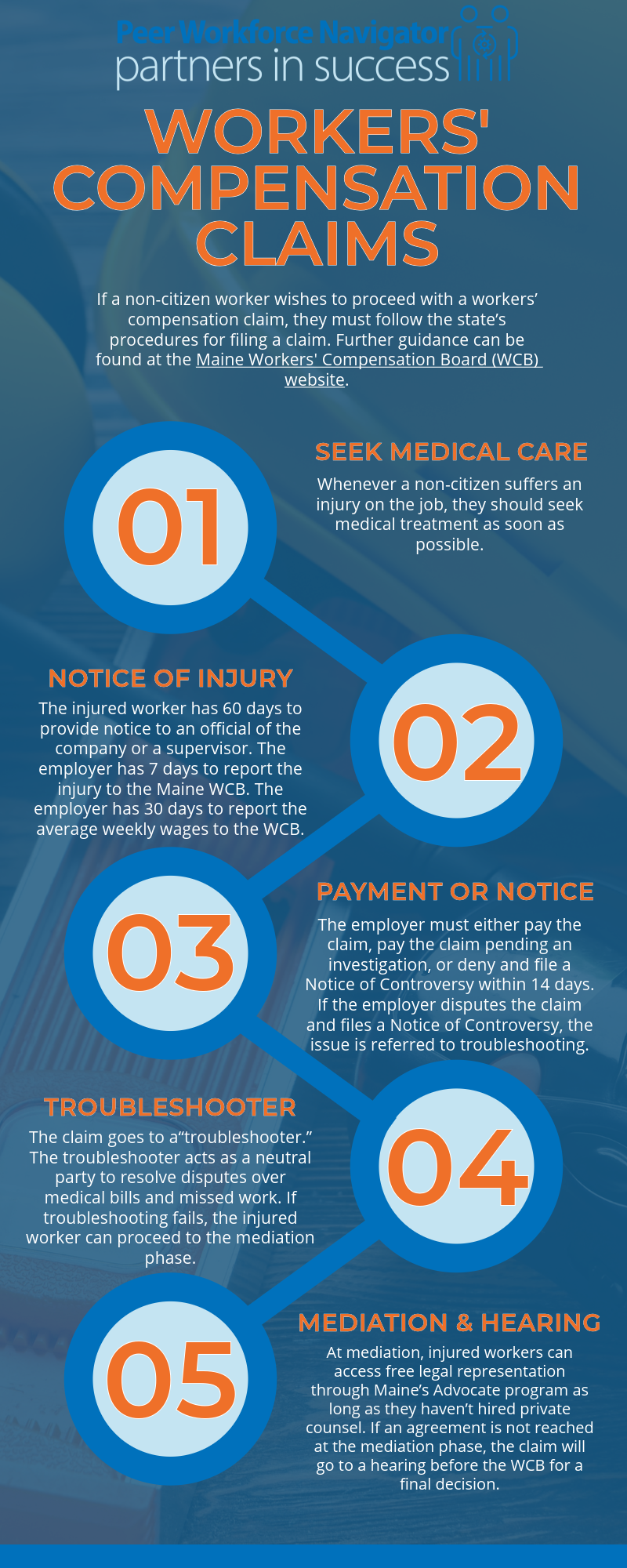
Workers’ Comp.
A brief explanation of who qualifies for workers’ compensation and how immigrant workers can access it.
Discrimination
Information about what qualifies as discrimination under Maine and Federal law, how to spot it, and how to stop it.
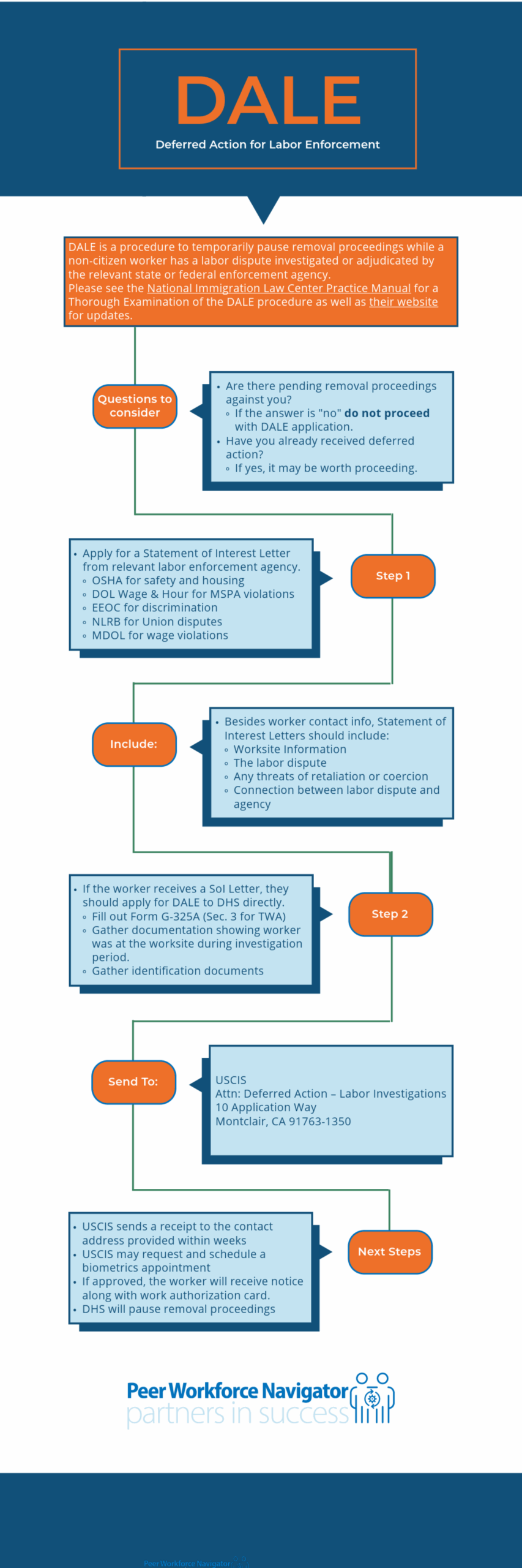
Deferred Action
How to help immigrant workers file for deferred action for labor disputes and halt removal proceedings.
Reporting Violations
How to help immigrant workers document and report violations of their rights.
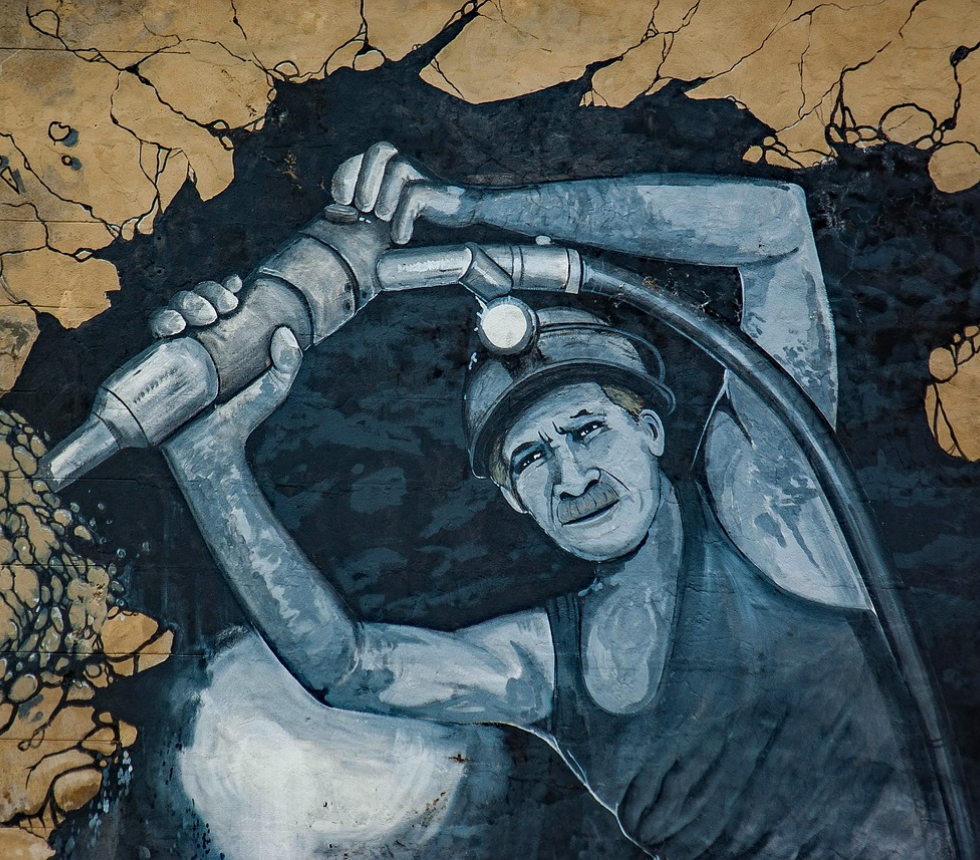
Workers Compensation
Workplace Discrimination
Cultural biases and practices exacerbate legal and language challenges, leading to discomfort, fear, and shame when applying for benefits or seeking legal assistance for work-related issues. Systemic barriers, implemented through federal, state, and local policies, prevent people of color from striving. For example, laws implemented in the early 20th century aided in increasing the salaries of jobs predominately held by white workers as opposed to jobs often held by non-citizen workers.
One of the most common obstacles non-citizen workers face is the language barrier, both in written and verbal communication. Data suggest that a significant portion of Maine’s non-citizen workers arrive with some higher educational attainment. Due to issues with getting credentials recognized and the recertification process, U.S. employers do not recognize these degrees and certifications, forcing non-citizens to work in industries that they may not be familiar with or in jobs they are overqualified for. This can exacerbate an already challenging transition to the United States.
Reporting Workplace Violations & Discrimination
Non-citizen workers may address potential violations of safety standards through an anonymous report to OSHA.
OSHA can be contacted at 207-626-9160 or through an online portal:
https://www.osha.gov/form/osha7
Reports can be made by workers themselves or by a delegated representative such as a Peer Workforce Navigator. The representative may need to act as an intermediary between the worker and OSHA in the event of an investigation to protect the worker’s anonymity.
Deferred Action