The structural violence of Maine’s job and healthcare markets has never been starker. The loss of Black life and the lives of Seniors, Disabled people, and Unhoused people are heartbreaking re-affirmations of the truth we all hold in our bodies – that the crises of capitalism will always land hardest on our most marginalized communities. While elected officials downplay the risk of infection and death, create rainy day funds, and prioritize relief to homeowners and employers, immigrant workers, care workers, and unemployed workers on the frontlines are tempering the resiliency of our movement.
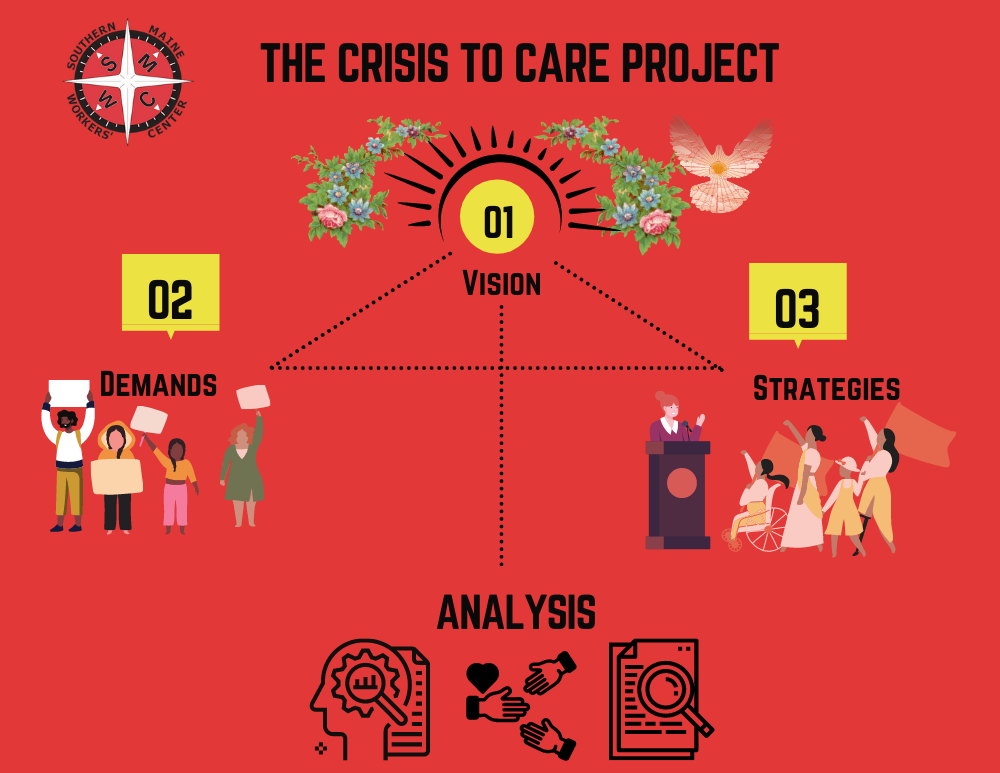
We know there is no going back to “normal.” Even before the pandemic, our people have been struggling under a system that denies our basic rights. That is why we developed this platform, which includes our analysis of the problem, our demands and vision for the future, and our strategies for how we get there. From mutual aid efforts, car marches, and grief actions, to the passage of hazard pay, and new campaigns for comprehensive unemployment reform, Mainecare expansion, and paid family leave; we’re proving we have the opportunity, will, and power to leverage this moment for good.
Our Analysis of the Problem
Throughout the winter of 2020 we held listening sessions with our members to better understand the nature of the crises we are facing. We’ve also spoken with hundreds of workers through our Worker Support Hotline throughout the pandemic– workers navigating unemployment, losing healthcare, and risking, and sometimes losing, their lives on the job. Our key issues as an organization are health care justice and workers’ rights, and these conversations highlighted how interconnected these issues are. These are some of the key problems we identified:
- Our health care system ties health coverage to jobs which was already a huge problem for workers, but has huge consequences during a pandemic and related mass unemployment and hazardous working conditions.
- Essential workers aren’t given supports they need to keep themselves, their coworkers, and families safe and healthy, and they are retaliated against when they try to advocate for themselves.
- Workers are being pitted against each other for what is being presented as scarce resources.
- Maine has had the highest racial disparities in COVID-19 infections. In June, Black Mainers were 20 times more likely to have tested positive for COVID-19. Part of the reason has to do with where people work. This is a racial justice issue.
We understand that these problems are themselves symptoms of an economic system that prioritizes profit over life, and that is rooted in white supremacy, colonialism and war. This year, our members did a study of the political economy, to deepen our analysis of how this crisis came to be.
Political economy is about looking at how society produces goods and services and asking how these systems relate to political structures, policy, culture and ideology. This all matters because in our current conditions, “goods and services” include human rights like food, water, shelter, and healthcare. The political economy is about how our human rights are distributed and controlled. The political economy study helped us understand that the crisis of the pandemic was not inevitable. Countries that prioritize caring for people over profits fared much better. Not to mention that pandemics themselves are made more likely by ecosystem destruction fueled by the capitalist system.
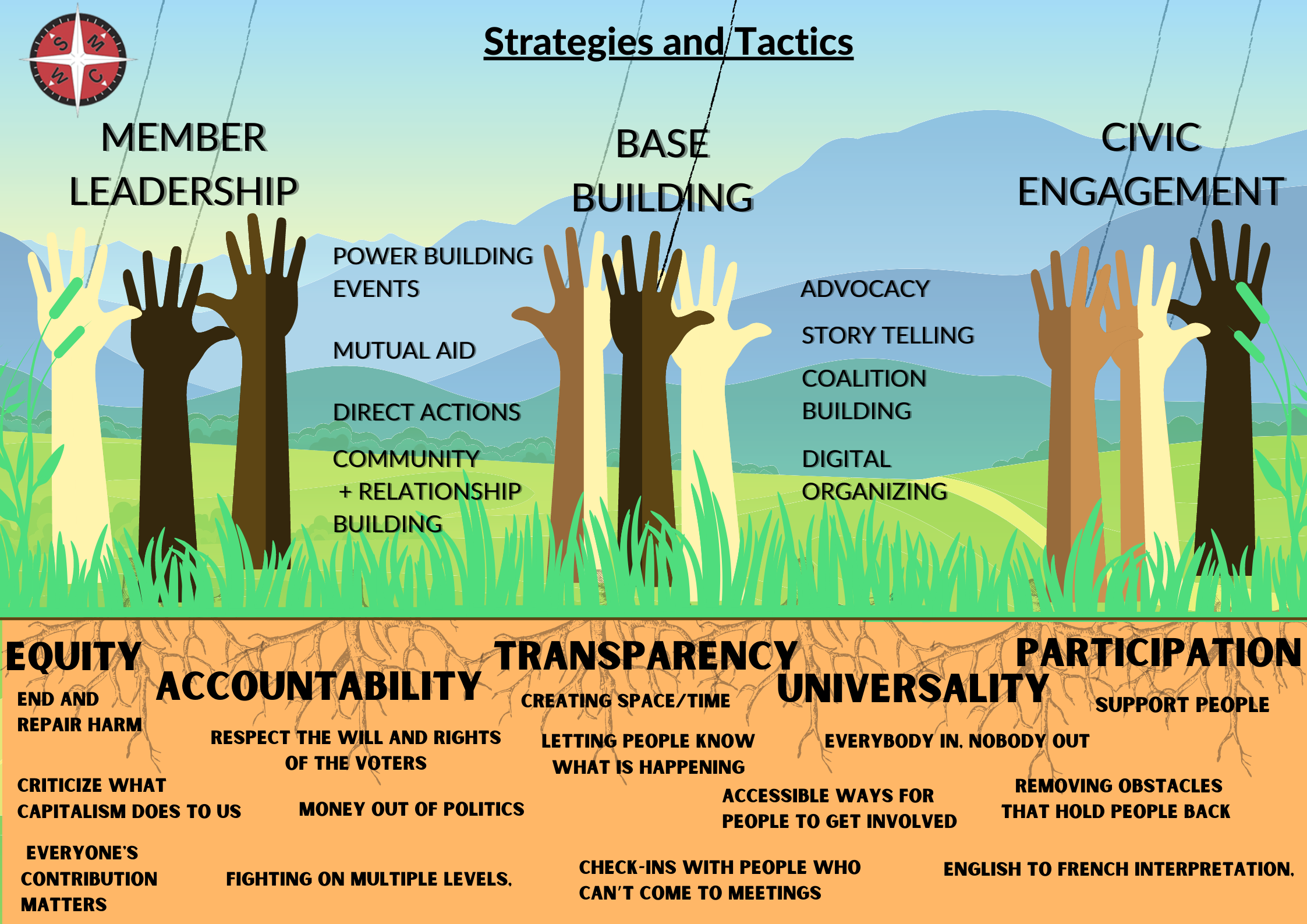
The study also helped us understand the power we have to shape the world to our values when we organize together. This platform holds vision for a world in alignment with our health, planet’s health and worker rights, rooted in our human rights principles of Equity, Accountability, Transparency, Universality, and Participation. A vision where human and community rights are understood, heard, and protected, and relations with our planet are restored and brought into balance. We invite all those who share this vision to shape change with us by becoming an SMWC member today.
Our Demands
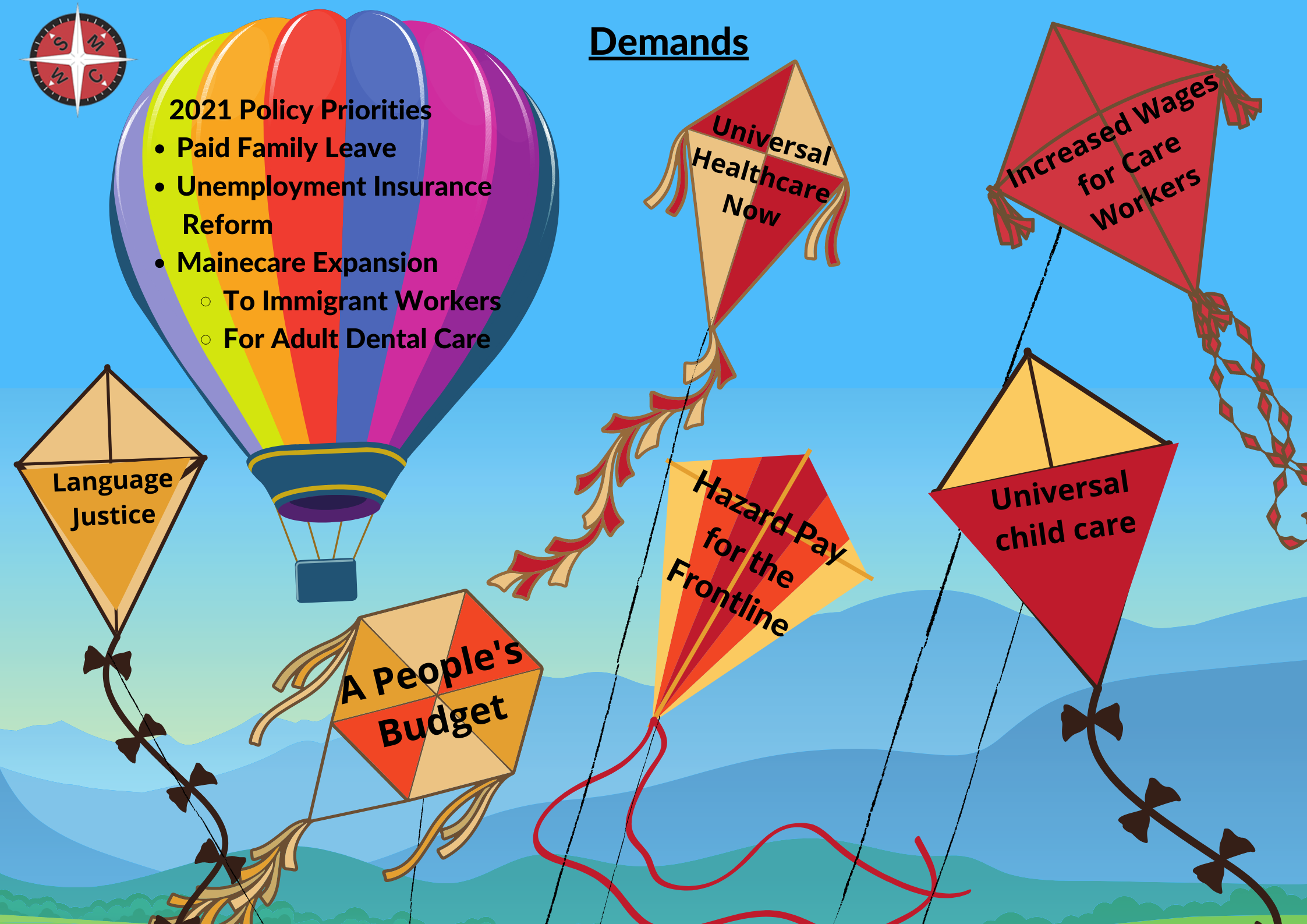
Our demands encompass protections that Southern Maine workers have needed since long before the COVID-19 crisis hit our state. Now, these measures have taken on new importance. We are committed to seeing them passed, but regardless of what politicians decide behind closed doors in Augusta, our organizing will continue to build solidarity and power from the bottom up amongst those most in need of meaningful structural change. We know we can change the status quos of austerity, inequity, white supremacy, and classism that run so deeply through our state. More than ever, we’re finding ways to meet in solidarity across the divides that have been forced onto us, and lift up a shared vision for the common good.
- Vaccine equity – prioritize vulnerable communities and eliminate barriers
- Universal, comprehensive publicly funded health care now
- Hazard pay for frontline workers
- Universal paid sick days & family leave
- Universal child care
- Increase jobs, wages, and benefits for the work of caring for children, the elderly, and the sick (from the thrive agenda)
- Equitable financing – budgets for the people
- Paid Family Leave for All
- Fixing Unemployment Insurance
- Dental Care for MaineCare recipients
- MaineCare expansion to Immigrant & Migrant Workers
Our Strategies
The world we are fighting for is at odds with the current systems of scarcity and the institutions that uphold them. Oftentimes we need to work within these systems, but we know we must engage a diversity of creative tactics to create a new common sense that encourages our communities to flourish. The power we build creates the space we need to breathe, to tend to our communities, and to honor our full selves.
- Member Leadership: We follow a transformative organizing model that emphasizes relationship building across difference. The beloved community we cultivate together is both a sanctuary from the political storm that surrounds us AND a vehicle for radical social change. New members become new leaders in realizing platform goals.
- Base Building: These tactics provide opportunities to build relationships with workers and to invite new members into our community.
- Direct Action Planning: Rallys, Marches, and creative Protests bring our message to the public and ensure we never go down without a fight.
- Digital Organizing: Communications like social media posts, blogs, and letter campaigns improve the accessibility of other strategies and extends the reach of our message safely.
- Community Support: Our Workers’ Support Hotline and Mutual Aid Fund provides support and information to empower workers to make informed decisions regarding workplace injustices, and invites them into the SMWC community
- Community and Power Building Events: Our Member Meetings, Committee Meetings, and Cantastoria Workshops are power building events that bring our demands and stories to the forefront, and help us to build out with the larger community.
- Civic Engagement:
- Story Telling: (challenging the common sense of the status quo with our experiences) Stories connect to each other and the platform; speaking our truths is a key tactic to counter ruling class influences during this crisis
- Coalition Building: Collaboration with aligned partners builds power and solidarity between organizations supporting the same issue(s)
- Legislative Campaigns: (policy coalitions, hearing testimony, people’s forums) Supporting elected officials in passing policies aligned with our platform and defeating policies that harm our platform